ADVERTORIAL

Why Stepping Outside for 3 Minutes Is the Most Annoying Part of Winter (And Why Your Heavy Winter Coat Doesn't Actually Solve It)

Updated 3 days ago
It happened again last Tuesday morning at 7:12 AM.
I was standing in our kitchen with a hot mug of coffee, wearing my standard morning uniform: wool socks, jeans, and a comfortable gray flannel shirt.
Then I heard the diesel rumble down the road. The county recycling truck was three houses away.
Our two 64-gallon rolling bins were still sitting on the side of the garage, exactly where I forgot to move them the night before. Outside, the thermometer read 26 degrees. A sharp northwest wind was whipping across our front lawn.
I stood there for three seconds weighing the exact same miserable calculation every suburban homeowner makes all winter long:
Do I walk all the way over to the front closet, drag out my heavy seven-pound winter parka, zip it up to my chin, and pull on thick gloves just to walk 60 feet down the driveway?
Or do I do "The Sprint"?
Like an idiot, I chose The Sprint.
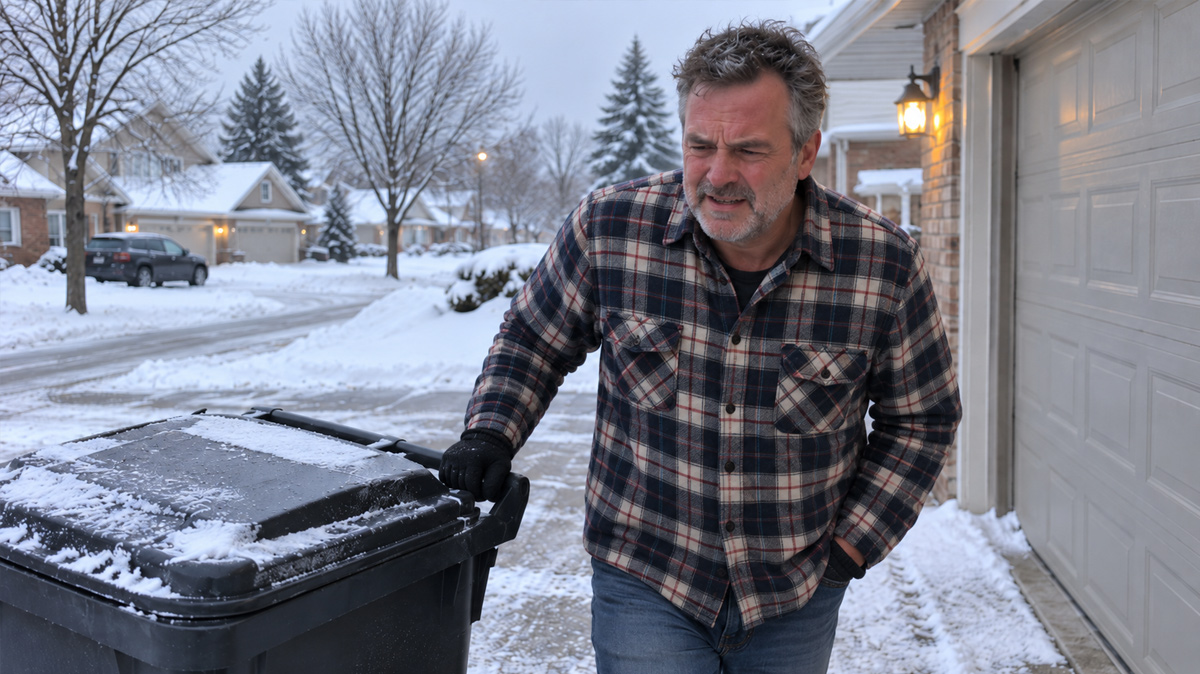
I stepped out the side door in just my flannel shirt. I grabbed the cold plastic handles of both bins and jogged down the asphalt.
Within four seconds, the cold cut right through the cotton weave of my shirt. It hit the back of my neck first. Then it drilled into my lower back. By the time I hit the curb and turned around, my shoulders were hunched up around my ears, my teeth were locked together, and my ribcage was stiff from shivering.
The whole trip took 75 seconds.
It took me almost forty-five minutes sitting next to the living room baseboard heater just to stop shivering.
And here is the kicker: that wasn't my only trip outside that day. It was just the first.
The "14 Micro-Trips" Nobody Talks About
If you live in a single-family home with a yard, a driveway, or a garage, you know winter's dirtiest secret.
Winter's biggest headache is not driving to work or shoveling out from a massive blizzard. Those happen a few times a season. You dress for them. You put on the heavy layers, the heavy boots, and the parka.
The real headache is the constant trickle of everyday micro-trips that take between two and four minutes:
• Rolling trash and recycling bins down to the curb on Tuesday morning.
• Walking across the freezing breezeway to the unheated garage to grab a screwdriver or an extension cord.
• Checking the mailbox at the road because the postal carrier delivered a package.
• Standing on the back deck in a freezing drizzle while the dog takes five minutes to find the exact blade of grass he likes.
• Carrying a bag of rock salt out to the front steps.
• Bringing in two logs of split firewood from the rack behind the shed.
Add them up. Most homeowners step outside 10, 12, or even 15 times a day.
Putting on a giant, restrictive arctic coat for each of those 90-second errands is a massive pain. You feel like the Michelin Man. You can't turn your neck. The moment you step back through the kitchen door, you are instantly sweating under all that down insulation, forcing you to strip it off immediately.
So you skip the coat. You dart outside in your sweater. And your body pays the price every single time.
For years, I assumed that was just the tax you paid for living in the suburbs during winter.
Until my brother-in-law Tom came over to help me fix an alternator in my detached two-car garage last December.
Why My Brother-in-Law Wasn't Shivering in a 34-Degree Garage
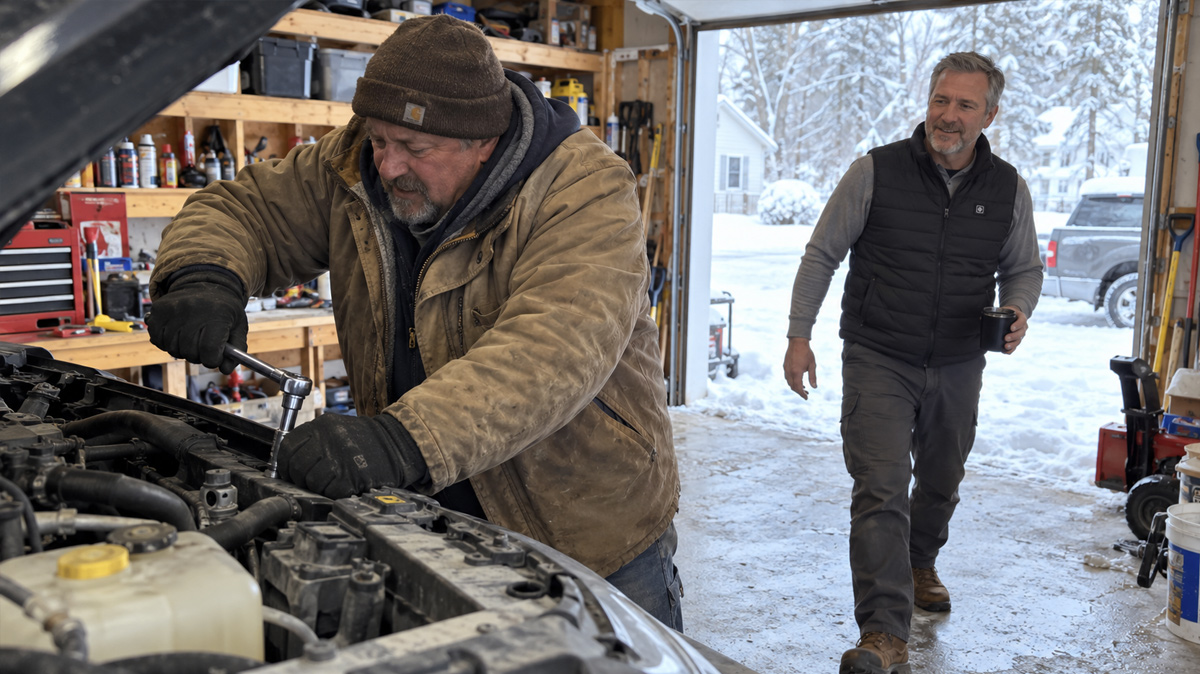
My detached garage has no insulation and zero heat. In December, it is basically a concrete icebox.
I had on two thermal shirts, a heavy fleece sweater, and a thick canvas work jacket. I could barely bend my elbows to turn a socket wrench, and my lower back was still aching from the draft seeping under the garage door.
Tom walked in wearing work pants, boots, and what looked like a regular, lightweight black vest over his long-sleeve shirt.
No bulky coat. No scarf. Arms completely free.
Forty minutes in, I was blowing warm breath into my numb knuckles. Tom was working casually, completely comfortable.
"Aren't you freezing to death in that thing?" I asked.
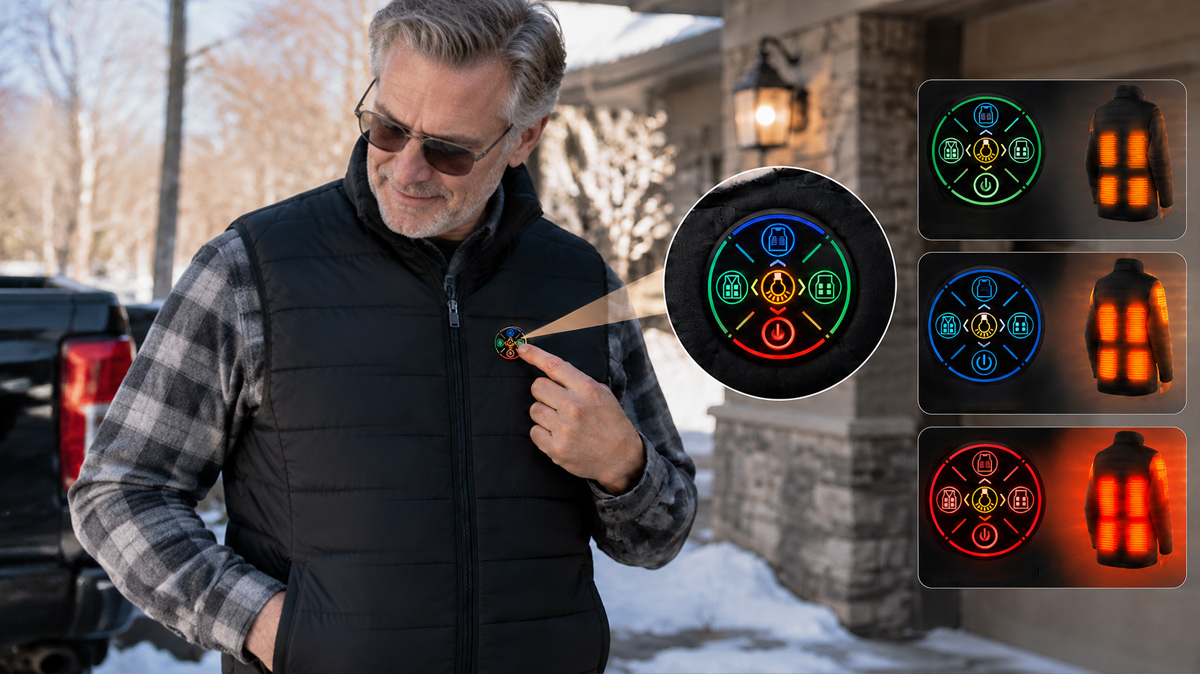
Tom laughed and tapped a small circular rubber button on the left chest of his vest. A subtle red LED ring was glowing right above the pocket.
"Press this," he said, taking off his leather work glove and putting my hand against the inside of his upper back.
It felt like pressing my palm against a heating pad fresh out of the dryer.
It wasn't just warm. It was genuine, radiating, deep heat. Right across his spine, his neck, and his lower back.
He had been wearing the Amoroart CoreHeat 7.4V 9-Zone Heated Stand-Collar Vest.
The Critical Difference: Why Cheap 5V Heated Vests Fail

Now, I am naturally skeptical of "heated gadget clothing." I had seen cheap heated vests on Amazon for $25. My neighbor bought one two years ago and threw it in the donation bin after three weeks.
When I looked into it, the reason became obvious immediately: voltage.
Most cheap heated vests on the market run on standard 5-volt USB power. That is the exact same weak current used to slow-charge an old smartphone.
A 5V system simply doesn't push enough electrical power to heat carbon-fiber elements through thick winter air. They take 10 to 15 minutes just to get lukewarm. The moment a 25-degree wind hits your chest, the ambient cold overpowers the vest completely.
The Amoroart CoreHeat is built around an upgraded 7.4V electrical platform.
That jump from 5V to 7.4V makes a massive difference:
• Instant Warmth in Seconds: When you press the chest button, you feel real heat spreading across your spine in under 10 seconds. Not a lukewarm simmer, but genuine warmth.
• Punching Through the Wind: The 7.4V high-wattage elements push heat deep into your core even when cold air is whistling around you.
• Massive 20,000mAh Battery Pack: Cheap vests come with tiny 5,000mAh batteries that die before lunch. This upgraded kit includes a dedicated 7.4V 20,000mAh power bank. It holds enough juice to run the heating elements all day across dozens of outdoor trips without running dry.
👉 [Click Here to Check Available Sizes (S to 4XL) and Claim Direct Pricing]
The 9 Heating Zones That Target How Homeowners Actually Lose Heat
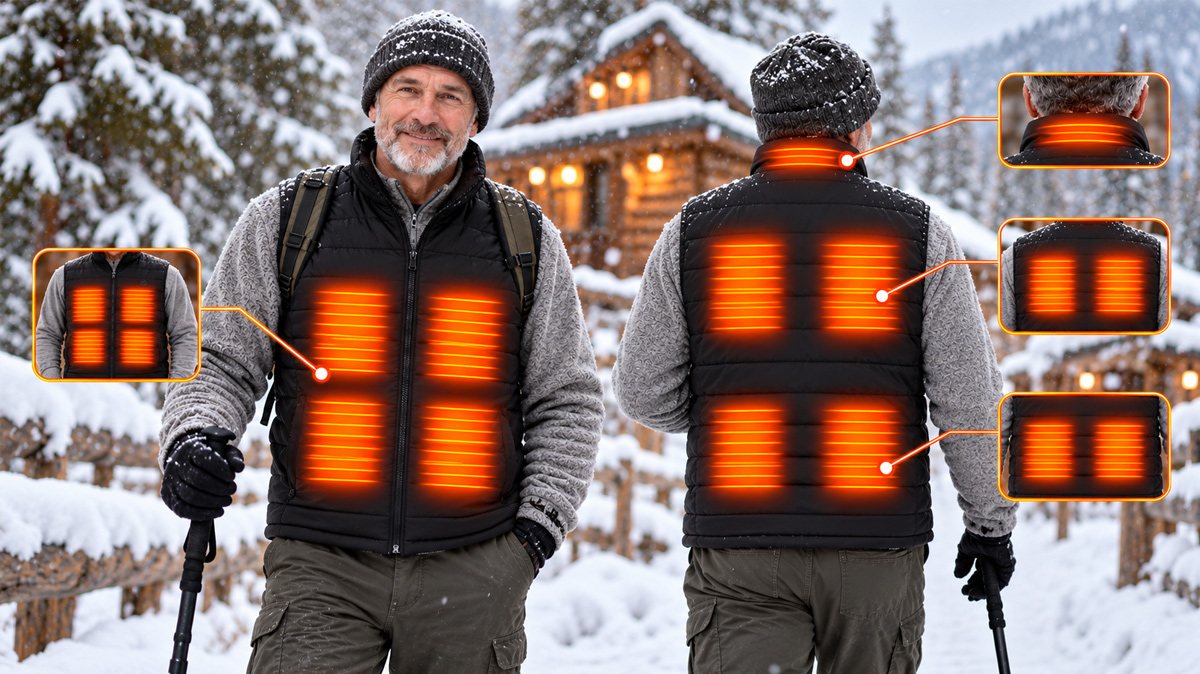
When you step out into the cold, your body doesn't lose heat evenly.
Your body is smart. When it senses freezing air, it immediately pulls warm blood away from your extremities to protect your vital organs. That is why your neck tightens up and your back gets stiff first.
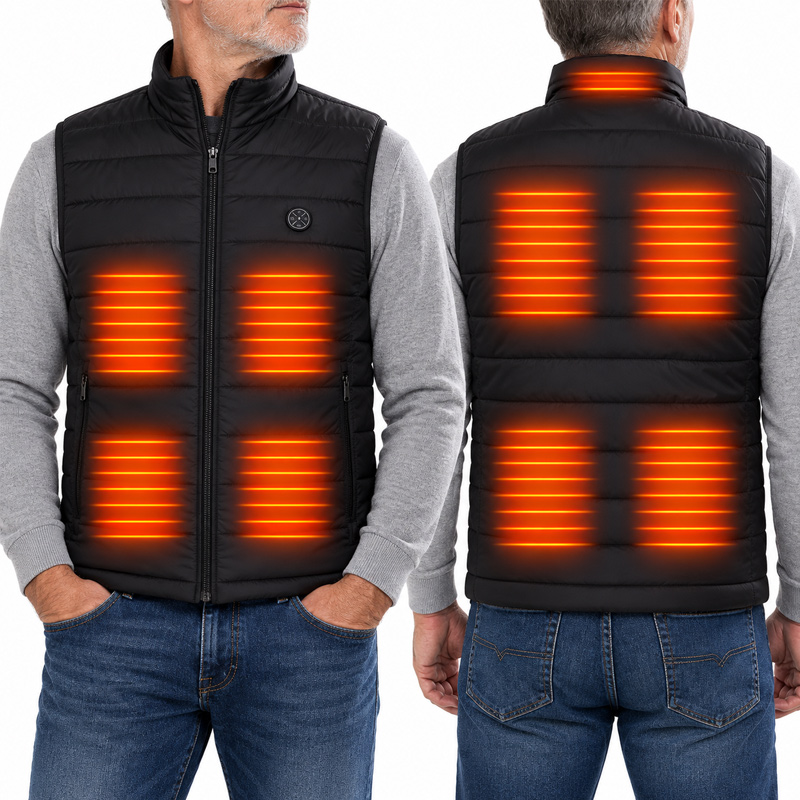
The designers of the Amoroart CoreHeat mapped out 9 specific heating zones to counter that exact reflex:
1. The Stand Collar (Neck & Cervical Spine): This is the single most important zone on the entire vest. Most winter drafts slide right down your shirt collar. The padded stand collar holds a dedicated heating element that wraps the back of your neck in constant warmth. It stops that involuntary shoulder-hunch the second you step onto the porch.
2. Upper & Mid-Back: Two large heating panels run between your shoulder blades, warming the blood circulating through your upper torso.
3. Lumbar & Lower Back (Kidney Region): Anyone over 45 knows what cold drafts do to lower back stiffness. Dedicated lumbar heating panels keep your lower back loose and warm, whether you are bending down to pick up firewood or carrying a heavy toolbox.
4. Front Belly & Hand-Warmer Pockets: Two heating elements sit directly behind the front zipper pockets. When you are standing on the back deck waiting for the dog, you can slide your hands right into the heated pockets to thaw your fingers instantly.
How My Winter Routine Actually Works Now
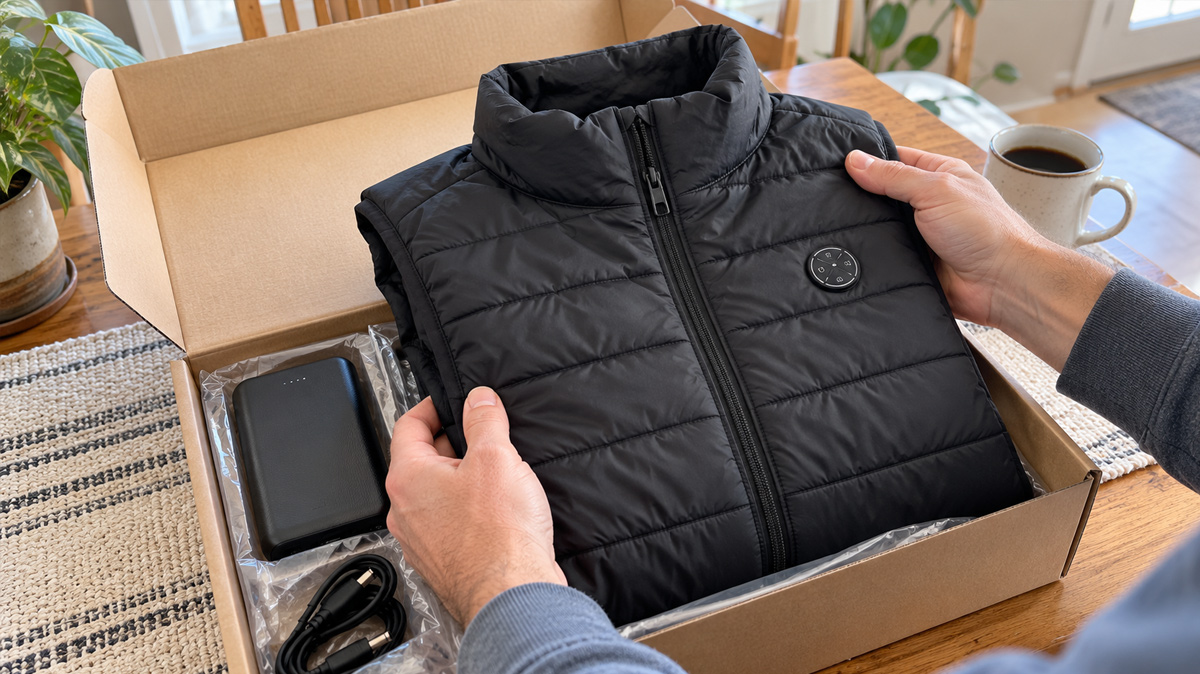
I ordered one in my size (they come in unisex sizing from Small all the way up to 4XL). It arrived in a clean box with the vest, the heavy-duty 7.4V 20,000mAh battery pack, and the charging cable.
Here is how my days work now:
I wake up at 6:45 AM. I pull on my jeans, a flannel shirt, and the Amoroart CoreHeat vest.
Inside the house, it just acts as a handsome, lightweight, tailored black vest. It looks like a standard high-end outdoor layer. It isn't puffy or noisy. It weighs barely anything. I leave the heat completely turned off while I make breakfast and drink my coffee.
Then comes the 7:15 AM recycling truck.
Instead of walking to the closet to battle with my seven-pound parka, I simply hold the button on my chest for three seconds.
The LED ring lights up red (High Heat).
By the time I reach for the side doorknob, I can already feel warmth radiating across the back of my neck and shoulder blades.
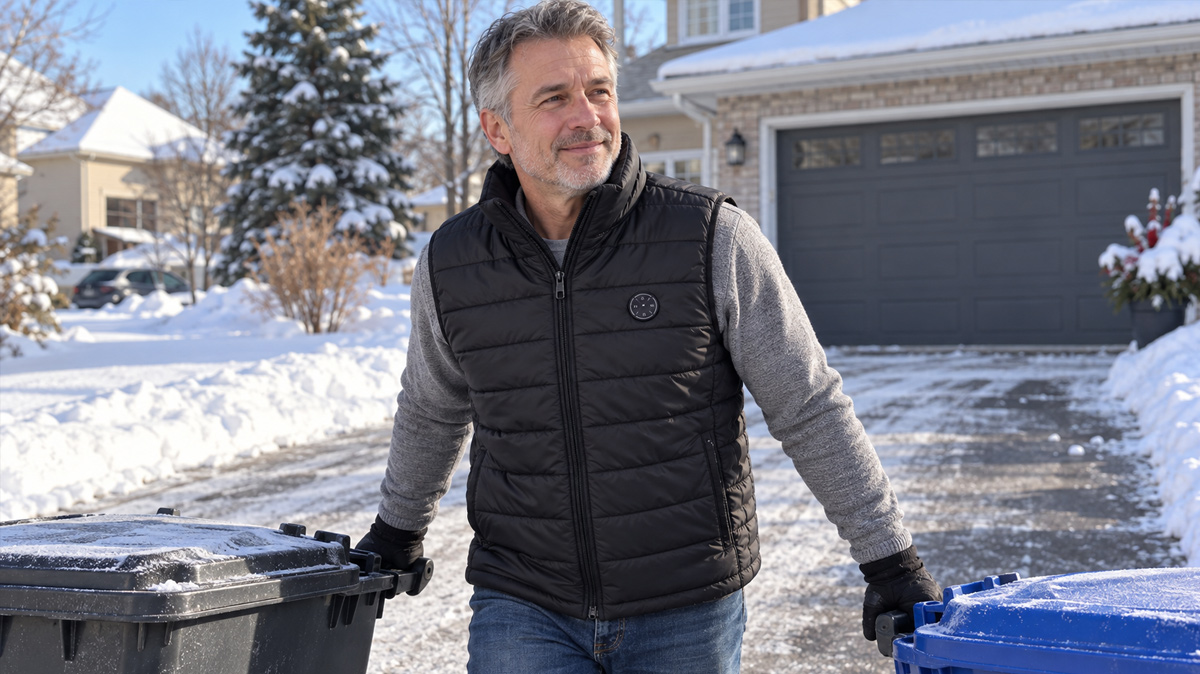
I walk outside into the 24-degree wind. I grab both bins. I walk them down the 60-foot driveway at a normal, relaxed pace.
No sprinting. No hunched shoulders. No shivering teeth.
My neck is warm. My chest is warm. My hands are tucked into heated pockets while I walk back up the driveway.
When I step back into the warm kitchen, I tap the button once to turn the heating elements off. I don't have to take the vest off. I don't have to hang anything up. I walk straight back to my kitchen counter and pick up my coffee mug.
Throughout the rest of the day, whenever I have to run to the cold garage, check the mail at the road, or let Buster out in the backyard, it is the exact same story:
Press the button. Step outside in total comfort. Press the button off when you walk back in.
It completely eliminated the worst friction of my winter routine.
The Practical Features Homeowners Appreciate
Beyond the heating system, this vest was clearly designed by people who actually live in cold climates:
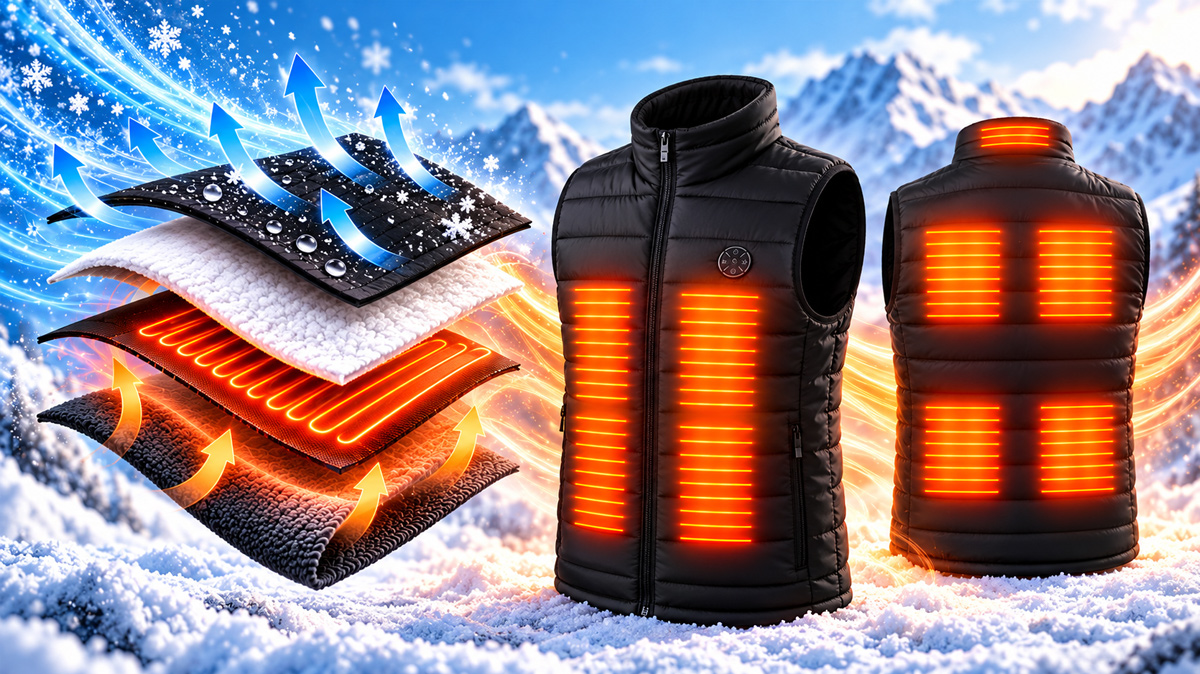
• Machine Washable: You don't have to baby it. When it gets dusty from the garage or muddy from yard chores, simply unplug the battery pack, tuck the waterproof power connector into the zippered inside pocket, and toss the vest straight into the washing machine on gentle. Hang it up to dry, and it is ready to go.
• Wind-Resistant Polyester Shell: The outer fabric blocks cold gusts from penetrating the insulation, while the soft cotton-blend lining feels comfortable against everyday shirts.
• Full Range of Arm Motion: Because it is a sleeveless vest, you have 100% arm freedom. You can carry bulky bags of salt, swing an axe, load groceries from the trunk, or work underneath a car without tight sleeves bunching up in your armpits.
• Unisex Tailored Fit: The clean solid-black design looks great on both men and women. My wife borrowed mine to walk the dog one afternoon, and I had to order a second one for her that same evening because she refused to give it back.
What Customers Are Saying

 Wayne M. - Lansing, MI

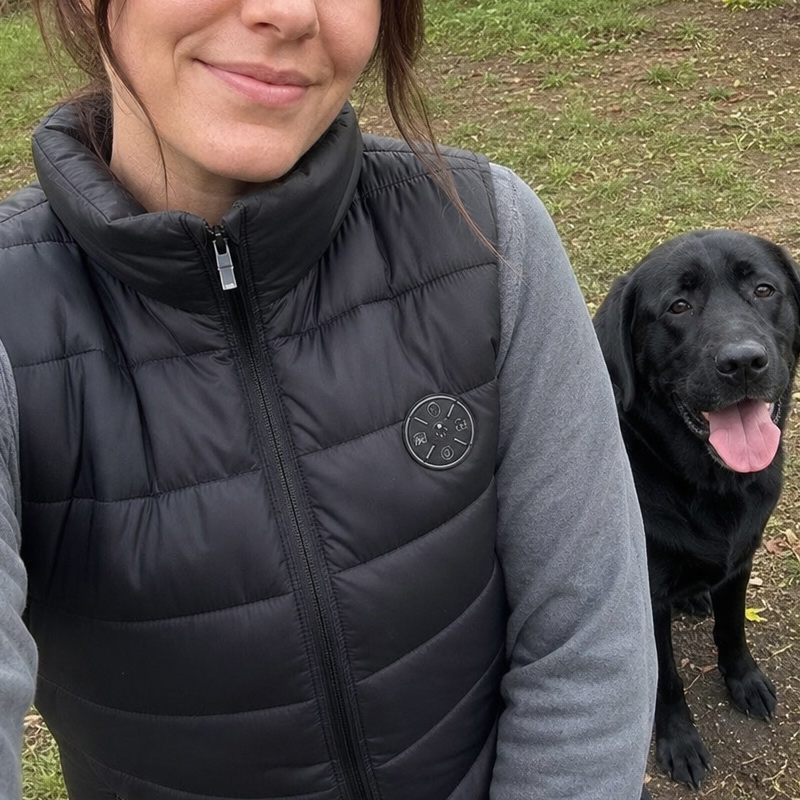 Brenda K. - Columbus, OH
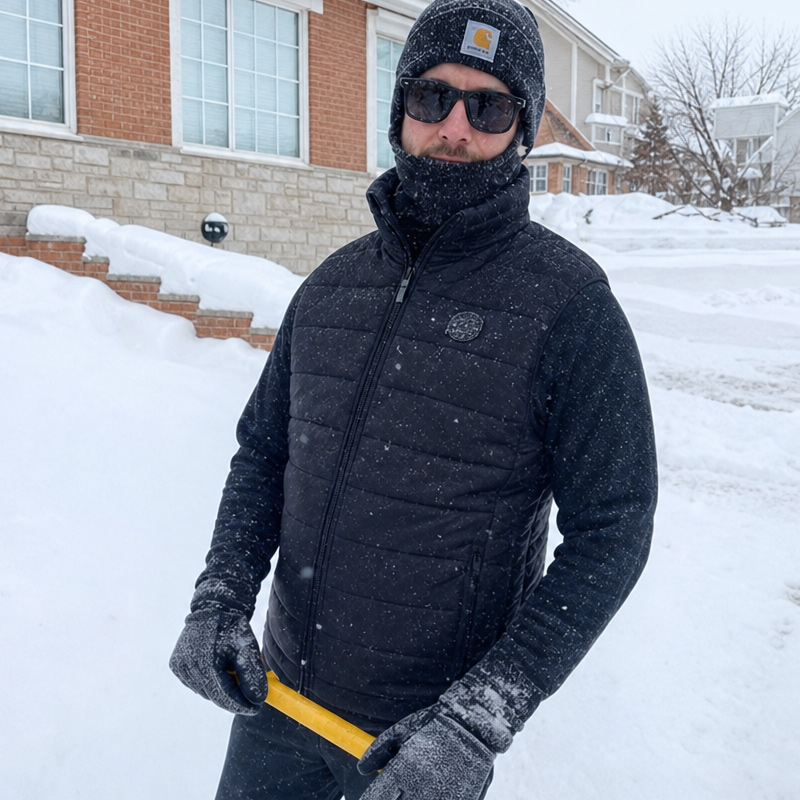 Dave S. - Scranton, PA
How to Secure Yours
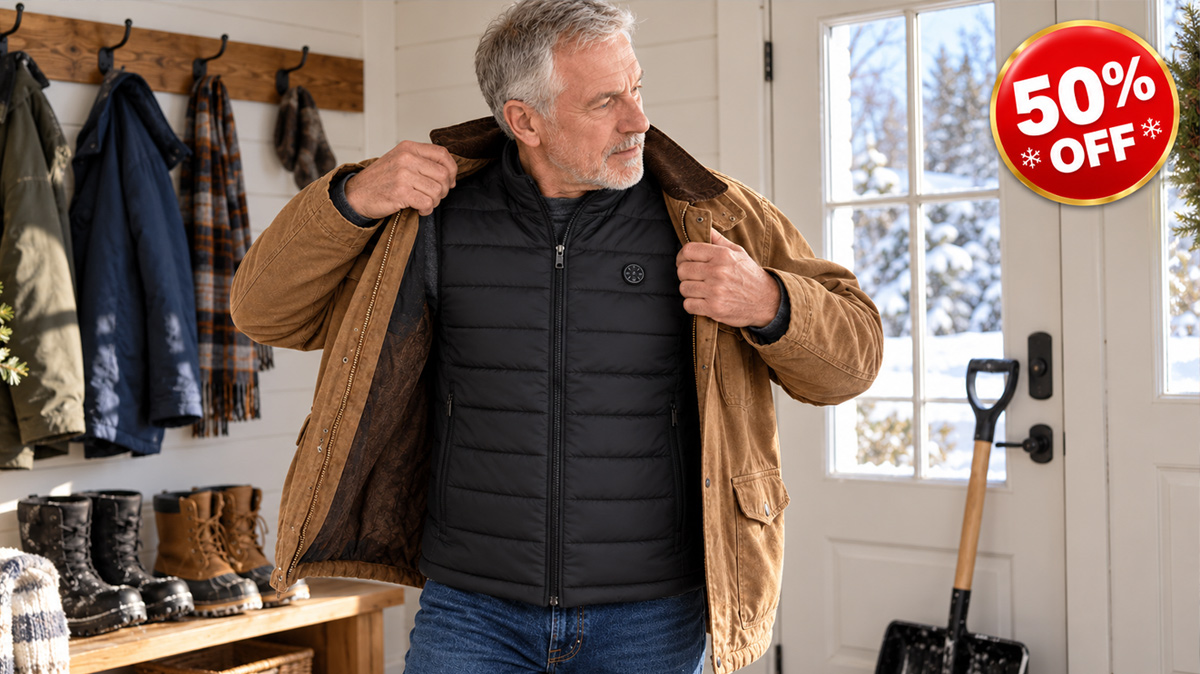
If you go to a big-box sporting goods store like REI or Cabela's, branded heated vests typically retail for anywhere from $160 to $240. And half the time, they don't even include the battery pack, forcing you to spend another $50 at checkout.
Because the Amoroart CoreHeat Heated Vest is sourced directly through the manufacturer's supply platform, pricing is exceptionally competitive:
• Direct Pricing (50% Off Limited-Time Sale): While branded retail vests sell for $160 to $240 without a battery, Amoroart is currently offering a direct 50% discount for winter. You can secure the complete Upgraded 7.4V 9-Zone Stand-Collar Vest bundle with the 20,000mAh high-capacity battery pack for just $69.99 (regular retail $139.98).
• Complete Size Range: Full unisex sizing in stock from S, M, L, XL, XXL, XXXL, up to 4XL.
• Protection: Guaranteed 30-day hassle-free return policy.
Final Verdict: Stop Suffering Through The "Driveway Sprint"
If you are tired of wrestling with a heavy, bulky winter coat just to spend two minutes outside, or if you are tired of freezing in a flannel shirt because you didn't feel like putting on three layers, this vest will change how you experience winter around your home.
It turns every quick outdoor chore from an icy chore into a non-event.
Click the link below to check current size inventory and claim your 7.4V 9-Zone Heated Vest bundle while current winter production batches remain in stock.